

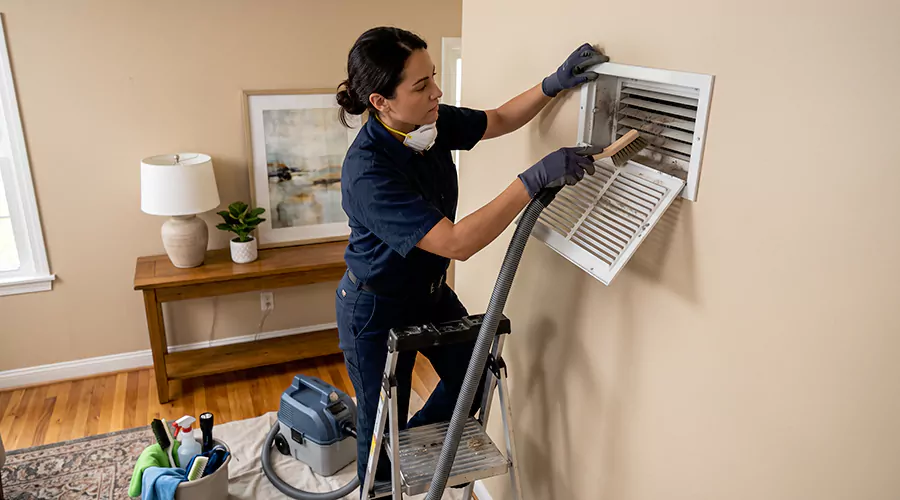
You can clean dirty AC vents by turning off the air conditioner, vacuuming loose dust and washing removable vent covers with mild soapy water. Most accessible AC vent covers take approximately 10 to 20 minutes to clean. The process removes surface deposits without requiring access to the entire air duct system.
Air conditioning vents collect dust as cooled air moves through the HVAC system and circulates around the room. Over time, airborne particles can settle on the grille and form visible deposits around its edges. Some vents also develop darker stains because moisture causes dust to stick to cold surfaces.
Regular cleaning keeps the openings clear and helps you identify unusual buildup before it becomes a larger problem. However, cleaning a vent cover is different from cleaning the ductwork or internal cooling equipment. Using the correct method prevents damage to the grille and avoids pushing debris farther into the system.
Why Do AC Vents Get Dirty?
AC vents become dirty when airborne dust settles on their surfaces or accumulates around the openings during normal cooling operation. Household particles are the most common source, but poor filtration and moisture can contribute to heavier deposits. Understanding the cause helps you choose an effective cleaning method.
Household Dust and Air Circulation
Everyday activities release particles that remain suspended in indoor air before settling on surrounding surfaces. These particles include fibers from clothing and dirt brought indoors on shoes. When the air conditioner operates, moving air can carry some particles toward supply vents and nearby ceilings.
Dust often collects along the narrow edges of the grille where airflow changes direction. In busy living areas, the deposits may become visible sooner because more particles are circulating. Light surface buildup is common and does not necessarily indicate contamination inside the ductwork.
Dirty or Poorly Fitted Air Filters
The HVAC filter captures airborne particles as air passes through the equipment. When a filter becomes heavily loaded, it can restrict airflow and affect system performance. A filter that does not fit securely may also allow unfiltered air to bypass its edges.
Particles passing around the filter can collect on downstream equipment and duct surfaces. However, replacing the filter will not immediately remove existing dust from vent covers. Both filtration maintenance and surface cleaning are needed when the grille already contains visible deposits.
Condensation Around Cold AC Vents
Air conditioning grilles can become cold during normal operation. When humid indoor air contacts a surface below its dew point, condensation may develop around the opening. This moisture makes airborne particles stick more easily and can produce dark staining around the vent.
A small amount of temporary condensation may occur under certain conditions, but persistent dampness requires attention. Repeated moisture can damage surrounding paint or drywall and may create conditions that support biological growth. The underlying moisture problem should be corrected rather than repeatedly cleaning the stain.
Construction Dust and Indoor Smoke
Renovation work can introduce unusually high amounts of airborne dust into a home. Fine material from drywall sanding may settle near AC vents or enter open return grilles while the system operates. Smoke from cooking or candles can also contribute to darker deposits on nearby surfaces.
These materials may continue accumulating after the original activity ends because particles remain on furniture or flooring. Cleaning the surrounding room is therefore part of preventing dust from returning to the AC grille.
What Supplies Do You Need to Clean AC Vents?
Cleaning AC vents usually requires a vacuum with a soft brush attachment and a few ordinary household cleaning supplies. The tools should remove dust without scratching painted metal or plastic surfaces. Strong chemicals and aggressive brushes are unnecessary for most routine vent cleaning.
Gather the following supplies before starting:
- Vacuum cleaner with a soft brush and crevice attachment
- Microfiber cleaning cloths
- Mild dish soap
- Warm water
- Soft-bristled cleaning brush
- Screwdriver that fits the vent cover screws
- Small container for removed screws
- Flashlight for inspecting the accessible opening
Check the material and finish of the cover before applying water. Most washable metal or plastic grilles tolerate gentle cleaning, but some decorative coatings require extra care. Wooden covers should not be submerged because excess moisture can damage their finish or cause swelling.
Avoid using bleach or disinfectant sprays inside AC ducts. Applying chemicals to concealed surfaces can introduce residues into the airflow path without addressing the source of dust. Routine surface cleaning normally requires only a mild cleaning solution.
How to Clean Dirty AC Vents Step by Step?
The safest cleaning method involves removing loose dust before applying moisture to the grille. This prevents particles from spreading across the surface and makes stubborn deposits easier to remove. Work only on accessible components and avoid opening electrical or mechanical parts of the cooling system.
Step 1. Turn Off the Air Conditioning System
Switch off the air conditioner at the thermostat and wait until the blower stops running. This prevents moving air from scattering loose dust while the cover is being cleaned. It also allows you to inspect the openings without conditioned air blowing directly into your face.
If the vent is positioned on a high wall or ceiling, clear the surrounding area before beginning. Use a stable and suitable access platform when necessary. Avoid standing on furniture because cleaning overhead openings requires controlled movements.
Step 2. Vacuum Loose Dust From the Grille
Use the vacuum's soft brush attachment to remove particles from the exposed surface. Move slowly along the grille openings and pay attention to the corners where dust accumulates. Begin with dry cleaning because applying water first can turn loose deposits into a sticky residue.
For ceiling vents, hold the vacuum attachment securely and avoid pressing firmly against the louvers. Some adjustable grilles are made from thin metal that can bend under excessive pressure. A gentle approach is usually enough to remove ordinary household dust.
Step 3. Remove the AC Vent Cover
If the cover is removable, check how it is attached before loosening anything. Wall and ceiling grilles commonly use mounting screws, while some floor registers lift out without tools. Support the cover while removing the final screw to prevent it from falling.
Set the cover on a protected surface and keep the screws together. If the grille has been painted into the surrounding wall, do not force it loose. Damaging the paint or drywall can create more work than the cleaning itself.
Step 4. Wash the Removable Cover
Prepare warm water with a small amount of mild dish soap and use a soft cloth to clean the grille. A soft brush can reach narrow openings where dust remains trapped. For washable metal or plastic covers, gently cleaning both sides removes deposits that are difficult to reach while the grille is attached.
Avoid abrasive pads because they may scratch the protective finish. If the grille has a wooden frame or an unusual coating, follow its material-specific cleaning instructions. After washing, rinse when appropriate and remove excess moisture with a clean towel.
Step 5. Clean the Accessible Duct Opening
With the cover removed, use a flashlight to examine the visible section of the duct opening. Loose dust may collect near the edges or directly behind the grille. A vacuum crevice attachment can remove material that is clearly visible and easy to reach.
Do not push the vacuum hose deeply into the duct system. Flexible ducts and internally insulated sections can be damaged by aggressive contact. If significant debris extends beyond the accessible opening, document its location rather than attempting to force cleaning tools farther inside.
Step 6. Dry and Reinstall the Grille
Allow the cleaned cover to dry completely before reinstalling it. Moisture trapped against damaged metal coatings can contribute to corrosion, while water entering the duct may create additional problems. Pay attention to the narrow corners where droplets can remain after washing.
Return the grille to its original position and secure the mounting screws without overtightening them. Make sure adjustable louvers remain in the intended position. Once the cover is secure, restore the air conditioner to its normal operating setting.
Step 7. Check the Results
Observe the vent after the air conditioner starts. The grille should remain secure without unusual rattling, and airflow should be similar to its previous condition. Look for loose particles blowing from the opening or signs that the cover has become obstructed.
A clean AC vent should no longer have thick visible deposits across its openings. However, minor dust may return as part of normal household activity. Monitoring the same grille over the following week can help identify whether buildup is occurring unusually quickly.
How Do You Clean Different Types of AC Vents?
Different AC vent designs require slightly different cleaning methods because their materials and locations affect how dust accumulates. Supply grilles commonly develop deposits along their edges, while return grilles collect particles directly from indoor air. Selecting a method that matches the cover helps avoid unnecessary damage.
| AC Vent Type | Common Problem | Recommended Cleaning Method |
|---|---|---|
| Ceiling supply vent | Dust along louvers and edges | Soft brush or vacuum extension |
| Wall supply vent | Dust trapped between grille openings | Vacuum and wipe removable cover |
| Floor AC register | Hair and loose debris | Remove cover and vacuum accessible boot |
| Return air grille | Lint collecting across openings | Vacuum cover and inspect filter location |
| Plastic AC vent | Surface dust and fingerprints | Mild soap and microfiber cloth |
| Painted metal grille | Dust and attached residue | Gentle washing followed by drying |
A return grille may contain an HVAC filter directly behind its cover. If so, inspect the filter according to the equipment instructions before cleaning the surrounding frame. Disposable filters should not be washed unless they are specifically designed for reuse.
For adjustable supply vents, avoid changing the damper position during cleaning. Closing openings without understanding the HVAC design can affect room airflow. Returning the grille to its original setting helps maintain the existing air distribution.
How Do You Remove Black Stains From AC Vents?
Black stains around AC vents can result from airborne particles collecting on cold surfaces. The deposits may come from household dust or indoor smoke sources. Moisture can make the particles adhere more firmly, producing marks that do not disappear with ordinary dry dusting.
Begin by examining whether the stain is limited to the grille or extends onto the surrounding wall. If the surface is dry and there is no sign of active contamination, gently wipe the washable cover with a damp microfiber cloth. A mild cleaning solution may help remove attached residue without damaging the finish.
Avoid scrubbing painted ceilings aggressively because dark deposits can become embedded in the surface texture. Strong friction may remove paint without correcting the condition that caused the stain. Persistent black marks also deserve investigation when they appear alongside condensation or unusual odors.
Black material should not automatically be identified as mold or soot based only on its appearance. If substantial dark deposits recur or the surface remains damp, determining the source is more important than repeatedly cleaning the visible area.
How Often Should You Clean AC Vent Covers?
AC vent covers should be inspected regularly and cleaned whenever visible dust begins accumulating around the openings. A monthly visual check is a practical starting point for many homes. A more detailed cleaning every three to six months may be sufficient when deposits remain light.
Homes with pets or frequent indoor activity may need more regular cleaning. Renovation work can also create temporary dust buildup that requires attention sooner than usual. The actual condition of the vent should determine the cleaning frequency rather than a rigid schedule.
| Condition | Suggested Maintenance |
|---|---|
| Light household dust | Inspect monthly and clean when needed |
| Visible deposits on grille | Vacuum during routine housekeeping |
| Pets or high indoor dust levels | Inspect more frequently |
| Recent renovation work | Clean after construction dust has settled |
| Persistent moisture or staining | Investigate the source before further cleaning |
These intervals apply to cleaning visible vent covers rather than the entire duct system. Internal air duct cleaning should depend on actual contamination conditions instead of a fixed annual schedule.
What Mistakes Should You Avoid When Cleaning AC Vents?
Improper cleaning methods can damage grille finishes or introduce moisture into the duct system. Excessive scrubbing may also bend adjustable louvers and damage internal insulation. The safest approach uses gentle tools and keeps cleaning limited to reachable surfaces.
Avoid the following mistakes:
- Cleaning while the HVAC blower is operating.
- Spraying household disinfectants directly into the ducts.
- Using stiff brushes that can scratch painted grilles.
- Pushing vacuum attachments deep into flexible ductwork.
- Reinstalling metal covers before they are completely dry.
- Blocking supply openings with decorative filter material.
- Removing internal HVAC panels without proper knowledge.
- Ignoring recurring moisture or substantial debris.
A common mistake is assuming that removing surface dust will correct every airflow problem. Dirty filters and damaged duct connections can affect HVAC performance even when vent covers look clean. Cleaning the grille should therefore be treated as one part of normal maintenance rather than a complete system repair.
When Should You Call an HVAC Professional?
Professional inspection is appropriate when substantial debris repeatedly blows from supply vents or when visible deposits extend deep into the ductwork. Persistent moisture and suspected significant biological contamination also require attention. A qualified technician can evaluate conditions that cannot be identified through ordinary surface cleaning.
An HVAC professional may inspect the filter housing and accessible duct connections to identify sources of recurring particles. The evaluation can also include checking airflow and examining internal cooling components when symptoms justify it. These checks help determine whether cleaning or repairs are actually necessary.
For 2026, reported U.S. whole-system duct cleaning costs commonly range from approximately $271 to $509 for typical projects, with larger or more difficult systems costing more. This expense is separate from cleaning removable AC vent covers. Light dust deposits alone do not justify whole-system cleaning.
How Can You Prevent AC Vents From Getting Dirty Again?
Reducing recurring AC vent dust requires controlling particles that circulate through the home. Regular filter maintenance helps capture material passing through the HVAC system, while household cleaning reduces the amount available to settle around grilles. Moisture control also helps prevent dark deposits from sticking to cold surfaces.
Maintain the Air Filter
Inspect the HVAC filter approximately every 30 days during periods of heavy cooling use. Replace it according to the manufacturer's recommendations or sooner when it becomes heavily loaded. The replacement filter must fit securely and be compatible with the equipment's airflow requirements.
Reduce Dust Around Vent Openings
Vacuum nearby flooring regularly and clean furniture with a damp microfiber cloth. These methods collect loose particles before they can circulate toward the vents. During dusty renovation work, protect openings while the HVAC system is off and remove the coverings before restarting normal operation.
Control Moisture Near Cold Surfaces
Monitor supply vents for recurring condensation during humid weather. Keeping indoor relative humidity around 30% to 50% is a useful general target for many homes. Investigate persistent dampness because cleaning the stain will not correct the underlying moisture condition.
Conclusion
Cleaning dirty AC vents requires removing surface dust and gently washing removable covers without disturbing the internal ductwork. Most ordinary buildup can be handled with basic household tools. However, persistent moisture or substantial debris may indicate a deeper problem. When those conditions appear, professional inspection can identify the cause. This week, clean your most visibly dusty AC vent and inspect its condition after several days.